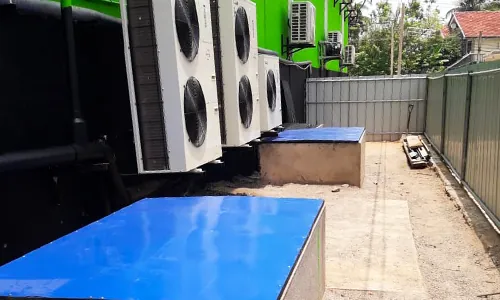
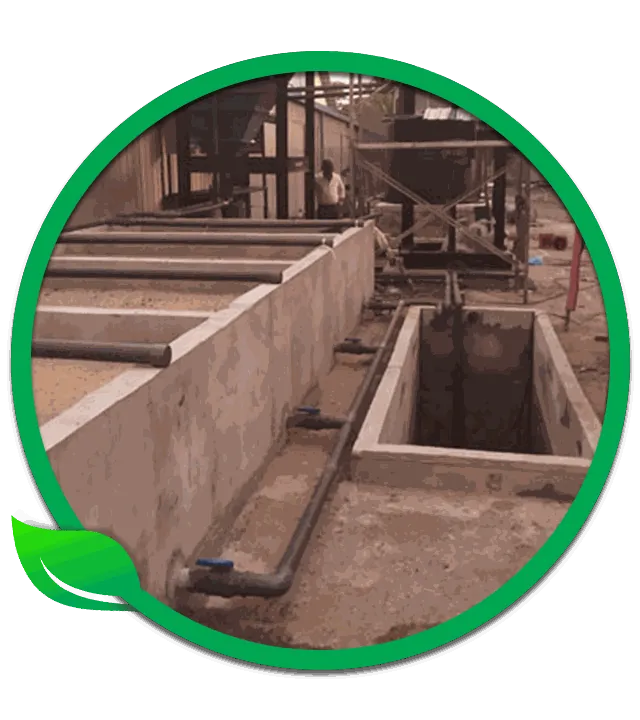
Parawewa Option A works through a natural, oxygen-present (aerobic) bacterial decomposition process built into a 4-stage chamber: (1) primary settling, (2) bacterial digestion in the presence of oxygen, (3) upward biological filtration through microbial filter media, and (4) odorless, low-noise clear water discharge. No electricity, blower, or artificial chemicals are required — the design is protected under Sri Lanka Patent #16371.
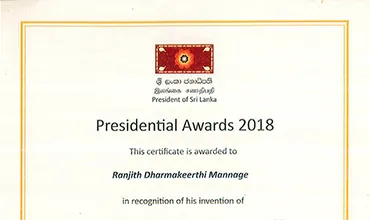
Invented in 1996 by Ranjith Dharmakeerthi Mannage and refined over years of field testing by the Parawewa engineering team — including Project Engineer Indra Somathilaka — the Parawewa system mimics the way a natural riverbed or wetland filters organic matter. Wastewater moves through distinct biological chambers populated by naturally occurring bacteria that break down solids in the presence of oxygen, rather than relying on a sealed, oxygen-starved (anaerobic) pit where sludge simply accumulates.
The 4 Stages of Passive Biological Filtration:
- Primary Separation: Heavier organic solids and grease settle out at the chamber base as wastewater enters, reducing the load on the biological stages that follow.
- Aerobic Microbial Digestion: Naturally occurring, oxygen-favoring bacteria colonize the biological media and actively digest organic sludge, converting it into liquid and gas rather than letting it accumulate as a growing solid mass.
- Biological Filtration: Effluent rises upward through specialized filter media layers, which trap remaining fine particulates and continue bacterial treatment as the water moves through.
- Clean, Low-Noise Outflow: The water is treated to a level fit for absorption and soaks into the ground (in Option B it is lifted to the absorption point) — without the mechanical hum of an aeration blower.
Why "No Electricity" Doesn't Mean "No Treatment"
A common misconception is that removing the electric blower means removing effective treatment. In Parawewa's design, oxygen exposure is achieved through the tank's internal geometry and biological media rather than a forced-air pump — which is also why the system produces very little operating noise compared to an aerated mechanical STP. This is also why the decomposition rate is engineered to be faster than in a sealed, unaerated traditional pit, where sludge can sit for years with minimal breakdown.
Every Parawewa unit is manufactured to the same patented specification whether installed as Option A (Gravity) or Option B (Seal Type Parawewa System) — only the discharge method changes to suit the site's water table, not the underlying biological process.