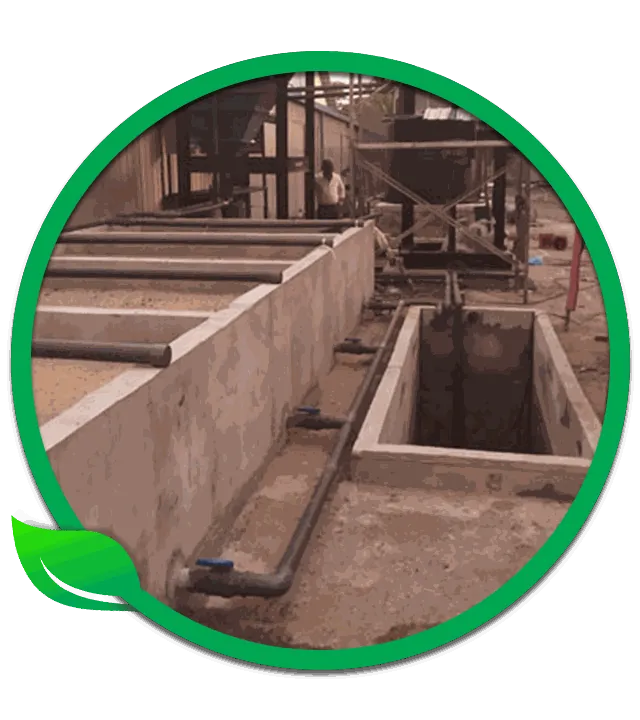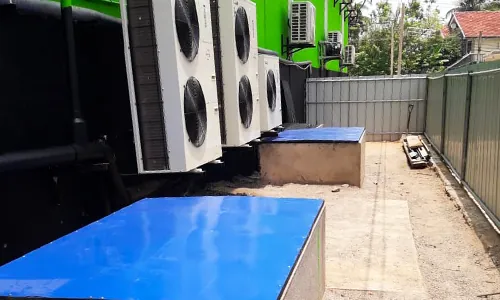
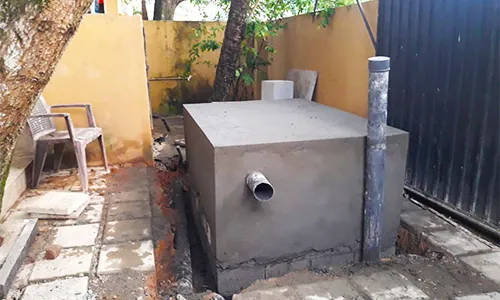
Installing septic tanks in high water table regions (Ja-Ela, Mathugama, Wattala, Negombo, Galle) requires shallow horizontal excavation, anti-buoyancy anchoring, and hermetically sealed chambers. Parawewa Option B Seal Type Parawewa System models are engineered specifically for waterlogged soils, handling the site without floating or leaking, backed by the Industry's Best 10-Year Written Warranty for Parawewa Sewerage System.
Building in marshy soil or coastal zones presents severe sanitation hurdles that standard concrete pits were never designed for. Standard rings absorb groundwater through porous joints, fill up within days of installation, and in extreme cases can even collapse or shift due to hydrostatic ground pressure pushing up from below — a problem locally known as "tank floating."
Engineering Guidelines for High Water Table Sites:
- Shallow Excavation Depth: Install wide, shallow horizontal tank geometries to avoid digging deep into saturated groundwater strata, reducing both excavation risk and dewatering cost during construction.
- Anti-Buoyancy Anchoring: An empty or partially empty tank in saturated soil can be pushed upward by groundwater pressure; the installation is anchored and ballasted to resist this uplift.
- Option B Discharge Unit: A heavy-duty sealed submersible pump lifts the treated water to the absorption point where natural gravity discharge is physically impossible.
- Sealed Concrete Chamber: A one-piece, in-situ cast concrete chamber (as opposed to jointed rings or brickwork) prevents inward water infiltration even when the tank sits permanently below the local water table.
A residential Parawewa installation at a home project in Bokundara, Piliyandala is one of Parawewa’s local residential projects. A free site inspection confirms whether your own land needs Option A or Option B.
Choosing Between Option A and Option B on Marshy Land
Not every plot in a "high water table" district needs Option B. A site survey checks the actual seasonal water table depth relative to the proposed invert level; where gravity discharge still clears the natural ground by a safe margin, Option A's no-electricity design remains preferable. Option B is recommended specifically where the water table sits too close to the surface for passive discharge to work reliably year-round, such as reclaimed marshland, low-lying paddy-adjacent plots, or coastal sand strata near Negombo and Galle.