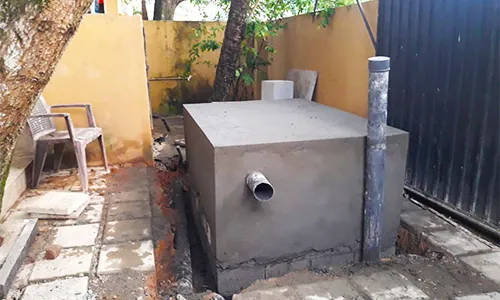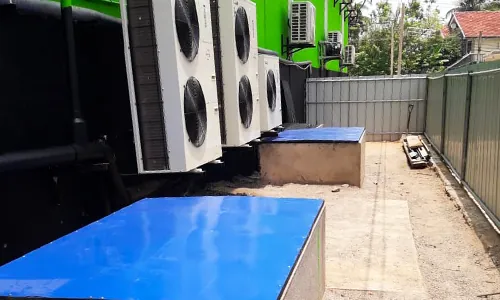
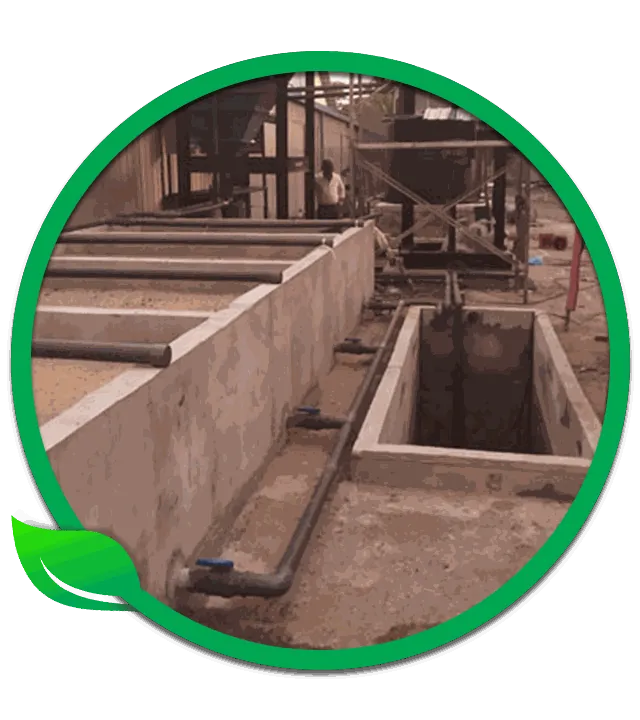
Imported mechanical Sewage Treatment Plants (STPs) require electric air blowers running 24/7, which adds a continuous power bill. Parawewa provides Option A (100% gravity flow with no electricity for normal ground) and Option B (Seal Type Parawewa System for high water table), with no continuous blower load, backed by the Industry's Best 10-Year Written Warranty for Parawewa Sewerage System.
When selecting a sewage system in Sri Lanka, home owners, factories, and commercial developers are often presented with imported mechanical STPs as the "modern" option. While effective on paper, mechanical STPs rely on an electric motor blower running constantly to keep aerobic bacteria oxygenated — the moment power is cut, that oxygen supply stops, bacterial activity collapses, and untreated sludge can back up within hours.
Parawewa takes a different engineering approach. Instead of forcing air into the chamber mechanically, the Parawewa design uses a naturally aerated, oxygen-present bacterial decomposition process built into the geometry of the tank itself — no blower, no compressor, no moving parts to service in the standard Option A configuration.
10-Year Operational & Warranty Comparison Table:
| Feature | Parawewa Bio Tank | Mechanical STP |
|---|---|---|
| System Options | Option A (Gravity) & Option B (Seal Type) | Single Motor Blower Unit |
| Option A Power Cost | No power cost | Continuous power bill (24/7 blowers) |
| Behaviour During Power Cuts | Unaffected — fully passive | Blower stops, treatment halts |
| Manufacturer Warranty | 10-Year Written Guarantee | Typically 1-3 Year Limited |
Retail operations such as a Keells Super outlet in Maharamandiya are exactly the kind of high-footfall commercial site where a continuously running blower adds a real, recurring line item to monthly overheads — a cost Option A's passive gravity design removes entirely.
Conclusion: Parawewa's patented technology, invented by Ranjith Dharmakeerthi Mannage and manufactured exclusively by Parawewa, delivers clear, odor-free discharge without the recurring electricity dependency of imported mechanical STPs — while still offering Option B for sites where gravity discharge genuinely isn't possible.