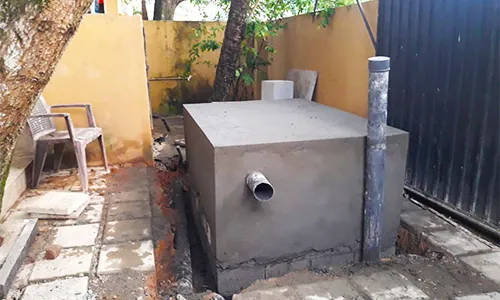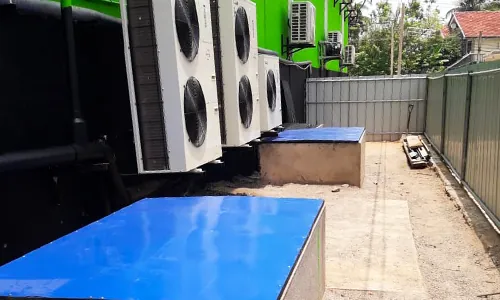
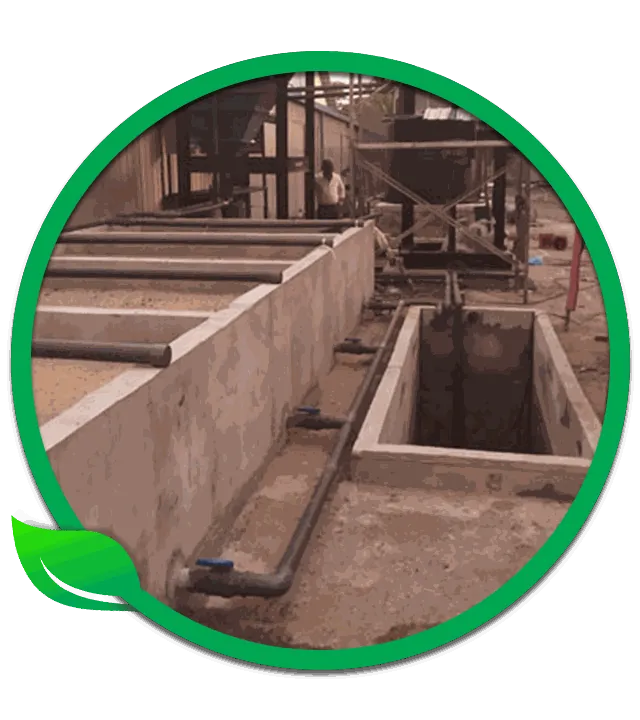
A septic tank treats sewage biologically; a soakage pit (or drain field) disperses already-treated, clarified water into the surrounding soil. They serve different stages of the same wastewater system — a septic tank without adequate soakage can back up, while a soakage pit fed raw, untreated sewage will clog and fail quickly. Parawewa's design treats the water to a level fit for absorption, so it soaks safely into the ground.
It's a common point of confusion for homeowners planning new construction in Sri Lanka: are a septic tank and a soakage pit the same thing? They're not, though they work together as part of the same overall wastewater system.
Septic Tank: The Treatment Stage
A septic tank is where raw sewage is biologically treated — solids settle or digest, and bacteria break down organic waste. In Parawewa's system, this happens through the 4-stage aerobic process described in our how it works article, producing clarified, largely odorless water as the output rather than raw effluent.
Soakage Pit: The Dispersal Stage
A soakage pit (sometimes called a drain field or leach pit) is a gravel-filled excavation that allows already-treated water to disperse gradually into the surrounding soil. It is not designed to treat raw sewage — feeding it untreated effluent will clog the soil pores with solids and cause it to fail, often within months.
Why Both Matter Together
- A septic tank without any onward dispersal point will eventually overflow once its capacity is reached.
- A soakage pit fed raw, undigested sewage will clog and require costly reconstruction far sooner than one fed clarified output.
- Parawewa's clarified discharge is treated to a level fit for absorption into the ground — reducing strain on the dispersal point compared to raw or partially-treated effluent.
When planning a new property, both stages should be sized together as part of a single site plan — our engineering team can advise on soakage capacity alongside your Parawewa tank sizing during a free site inspection.